
Herbal Profile
Herb Name
Symphytum officinale
Also known as “The Plant of Eden”
Family: Boraginaceae (Borage family)
Pronounced “KUM-free”
At a Glance
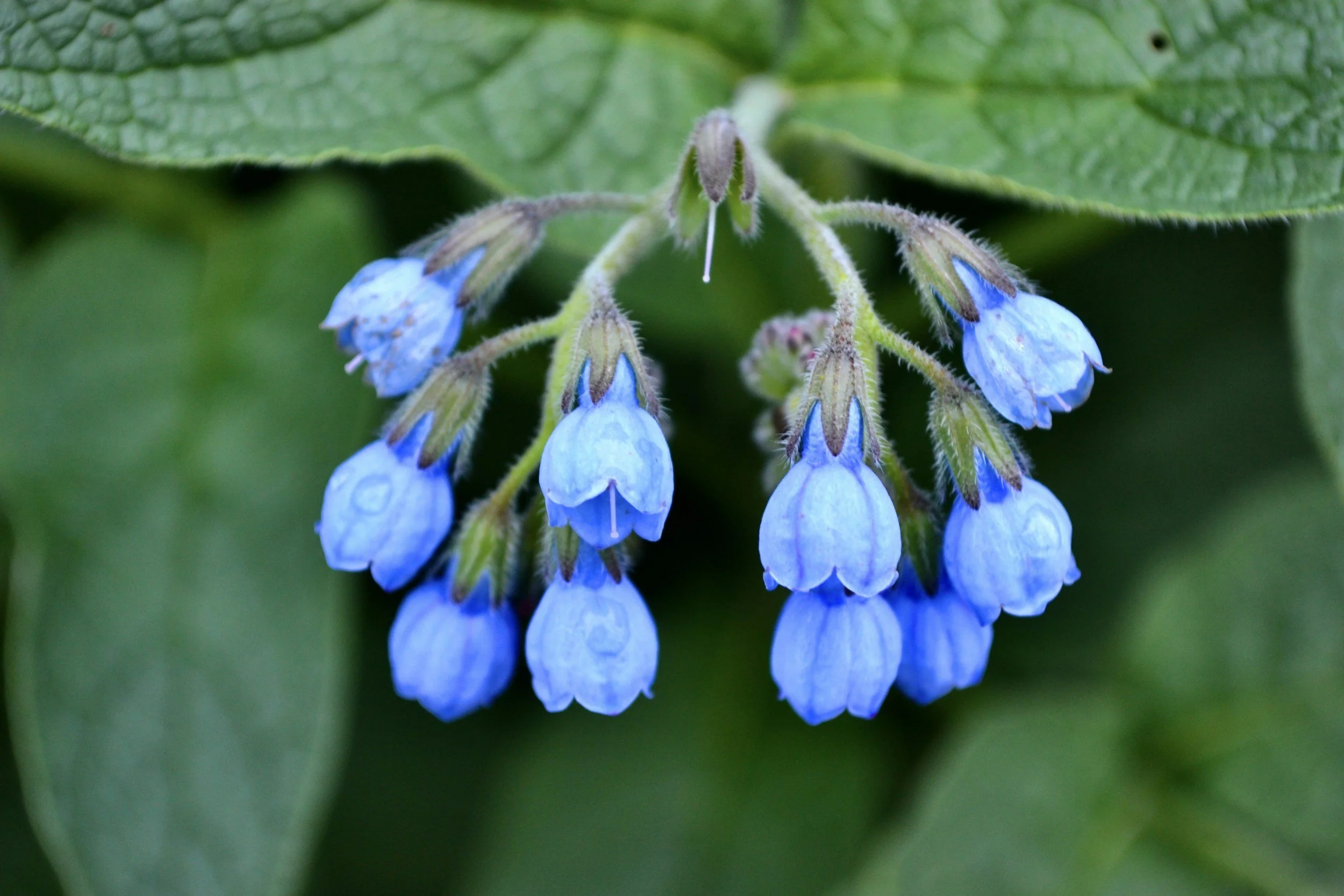
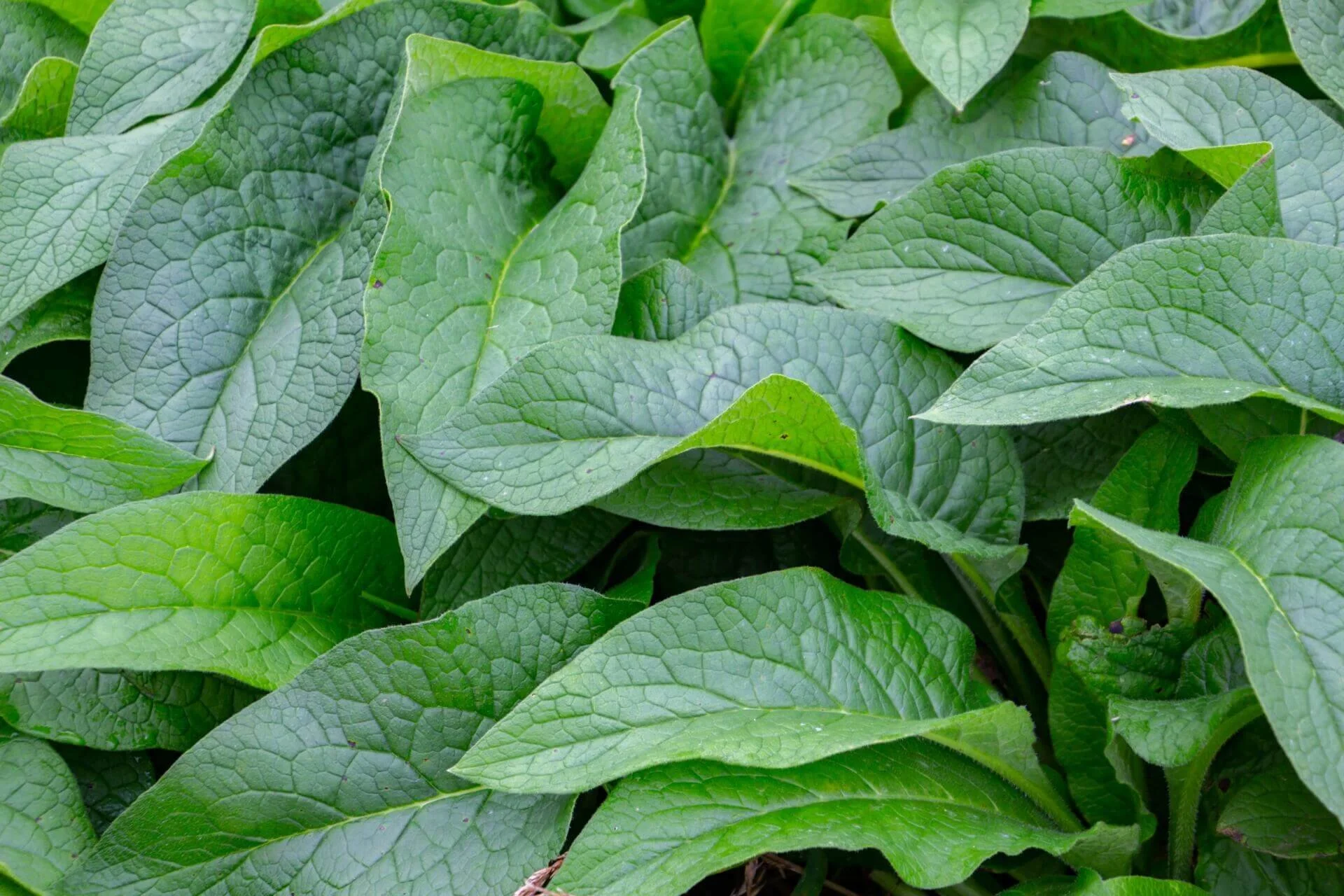
Comfrey is a deep-rooted perennial herb known for its large, fuzzy leaves and vigorous growth habit. Traditionally valued in medicinal and agricultural contexts, comfrey has most often been associated with topical herbal preparations, soil building, and regenerative garden practices rather than internal use. It is recognized as a valuable medicinal and metaphysical herb.
Read to the end for all details.
Traditional & Common Uses
Because of its strength and potency, comfrey has historically been approached with care. Its uses reflect an understanding that some plants are powerful allies when worked with thoughtfully and appropriately. Common uses are described below.
-

Medicinal
Comfrey is a valuable herb when used topically for its healing and anti-inflammatory properties, but it should not be taken orally. Traditionally, comfrey is used in salves, poultices, and infused oils.
Wound Healing & Skin Regeneration: Comfrey contains allantoin, which promotes rapid cell growth and tissue repair, helping to heal minor cuts, abrasions, burns, and sunburns. This has led to its traditional names like "knitbone" or "boneset".
Pain and Inflammation Relief: Rosmarinic acid provide significant anti-inflammatory and analgesic effects. It has been effective for Joint Pain and Osteoarthritis, Muscle Aches and Back Pain, Sprains, Strains, and Bruises, and Soothing Irritated Skin. Its mucilage content provides a soothing, cooling, and moisturizing effect, beneficial for eczema, psoriasis, rashes, and insect bites.
-

Metaphysical/Spiritual
Comfrey is a powerful spiritual herb. In symbolic and folk traditions, comfrey is often associated with healing, protection, and safe travel. It is carried or included in charms intended to support journeys, recovery, and resilience.
Metaphysically, comfrey is known as the "Plant of Eden," a powerful healer for bringing things together. It symbolizes strength, grounding, and rapid mending of physical and emotional wounds.
It is associated with the root chakra, the element of water, and Saturn. It encourages stability, protection, and the binding of what’s broken, while also drawing prosperity and clearing negative energy.
-

Cosmetic
Comfrey has appeared in traditional topical and cosmetic preparations, particularly in creams, balms, and salves formulated for dry or stressed skin. Its use has generally focused on external applications rather than fragrance.
Our Current Relationship With This Plant
Comfrey is a plant we approach with both appreciation and restraint. We appreciate it for it’s wide range of uses. We value it as a long-lived perennial with deep roots—both literally and metaphorically—and as a reminder that not all useful plants are meant for the same kinds of interaction. On our farm, we are learning how comfrey fits into soil health, regenerative practices, and carefully defined herbal uses, rather than broad application.
Learn more about how we grow and harvest our herbs.
Typical Availability
Winter: Dried
Spring, Summer & Fall: Fresh & dried
Form: Fresh & dried, loose leaf and bundled
Plant Starts: Available in the spring
Visit our Farm Products page for current availability.
A Couple of Important Notes
For external use only: Never ingest comfrey (as a tea, supplement, or food). It contains pyrrolizidine alkaloids (PAs), which are toxic to the liver and potentially carcinogenic when consumed.
Do not apply to open wounds: Because comfrey promotes rapid healing of the top layer of skin, it can seal in dirt, bacteria, or infection if applied to deep, dirty, or puncture wounds, potentially leading to an abscess.
Information here reflects traditional use, observation, and personal experience, shared for educational purposes. How a plant is used—or whether it’s appropriate for you—can vary. Please research individual herbs or consult a qualified professional when needed.