
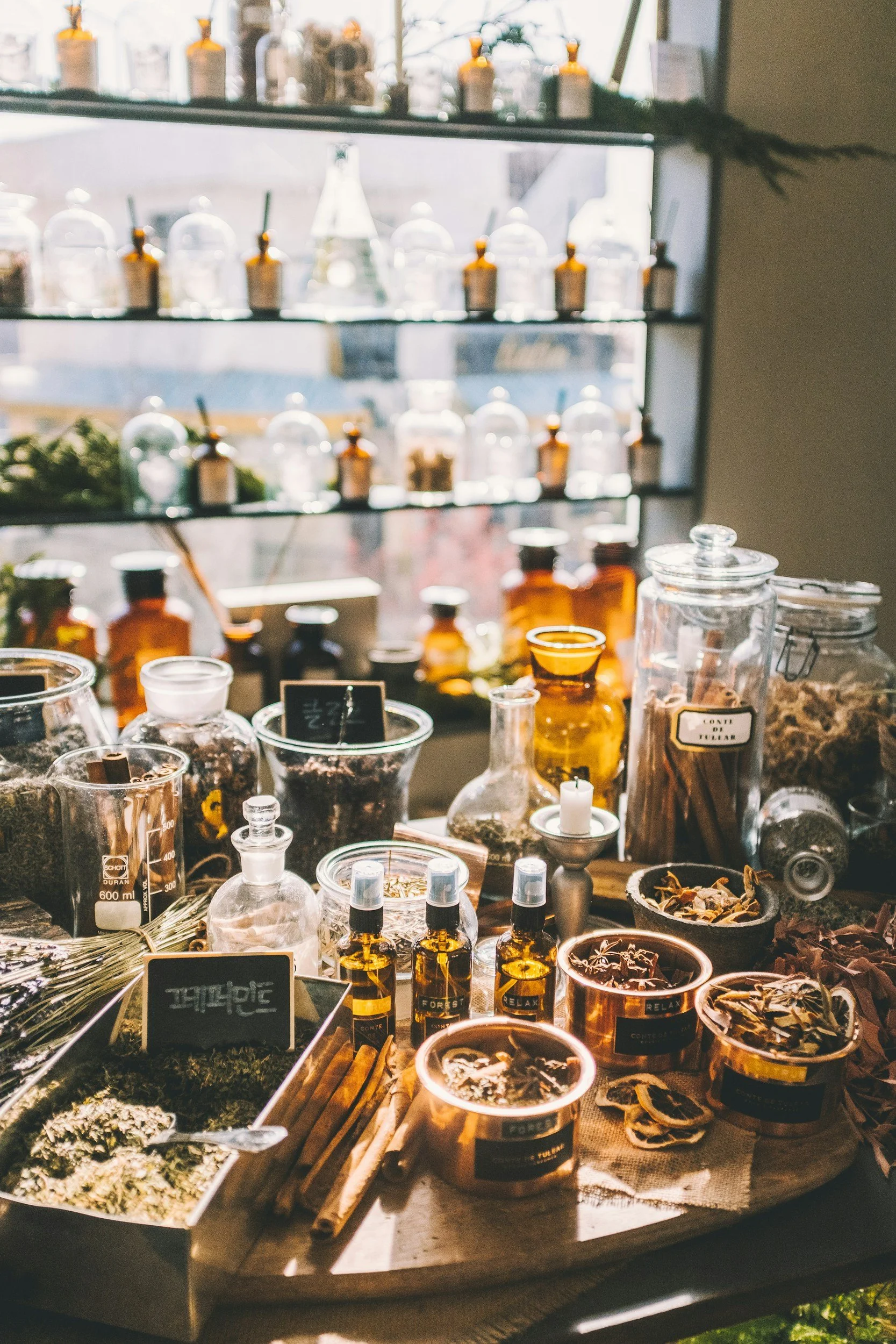
Working With Herbs: Common Herbal Preparations
Common Herbal Preparations
People have been working with herbs in thoughtful, hands-on ways for thousands of years. Across cultures and traditions, plants have been prepared in many forms depending on the part of the plant, the desired use, and the context in which they were gathered.
At Heart of Rock Farm, we view herbal preparations as part of a long continuum of knowledge—something to approach with curiosity, care, and respect. This page offers a high-level overview of some of the most common ways herbs have traditionally been prepared. It is intended for learning and context, not instruction or medical guidance.
Herbal Teas (Infusions)
Herbal teas—often called infusions—are one of the most familiar ways people work with herbs. They typically involve steeping plant material in hot water to extract flavor, aroma, and plant constituents.
Infusions are commonly associated with:
Leaves, flowers, and softer plant parts (typically — but not necessarily — in dried form)
Everyday use and simple rituals
Single herbs or blended combinations
Teas have long been enjoyed for comfort, reflection, and tradition as much as for their practical (medicinal) uses.
Decoctions
Decoctions are similar to teas but are traditionally used for tougher plant materials such as roots, bark, or seeds. Instead of steeping, these plant parts are gently simmered in water for a longer period.
Decoctions are often associated with:
Roots and woody materials
Longer preparation times
Historical and traditional herbal practices
This method reflects the understanding that different parts of a plant require different approaches.
Tinctures
Tinctures are liquid herbal preparations made by extracting plant material into alcohol or another solvent over time. This method has been used historically to preserve herbs and concentrate certain plant properties.
Tinctures are traditionally valued for:
Long shelf life
Small serving sizes
Portability and storage
They are a more involved preparation and are typically made with careful consideration of plant, solvent, and time.
Infused Oils
Infused oils are created by steeping herbs in a carrier oil over a period of time. These oils have been used historically as the foundation for topical preparations.
Infused oils are commonly associated with:
Skin and body care
Massage and ritual use
Salves, balms, and ointments
They bridge the line between herbal preparation and personal care.
Salves & Balms
Salves and balms are semi-solid preparations traditionally made by combining infused oils with natural waxes. They are designed for external use and have been part of household herbal traditions for generations.
These preparations are often connected to:
Skin care and comfort
Everyday home use
Practical, portable remedies
Syrups & Honeys
Herbal syrups and honeys have historically been used to make herbs more palatable and preserve them for seasonal use. These preparations often combine herbs with sweeteners such as honey or sugar.
They are commonly associated with:
Seasonal traditions
Flavor and enjoyment
Family and folk practices
Powders & Capsules
Dried herbs have sometimes been ground into powders and used directly or placed into capsules. This method reflects a more modern adaptation of traditional herbal use.
These forms are often valued for:
Convenience
Consistency
Ease of storage
A Thoughtful Approach
Each preparation method reflects not only the plant itself, but also the intention behind its use. Different cultures, lineages, and households have developed their own ways of working with herbs, and no single approach fits everyone.
Book Recommedations:
If you’d like to learn more about herbal preparations and methods, Herbal Medicine for Beginners by Katja Swift and Ryn Midura is a great place to start. The Lost Book of Herbal Remedies by Nicole Apelian & Claude Davis is another excellent resource.
A Gentle Note
This page is offered for educational and informational purposes only. Herbal preparations vary widely in suitability and effect depending on the individual and the plant involved. We encourage careful research and consultation with qualified professionals before working with herbs in any medicinal capacity.
Looking Ahead
In the future, we may expand this section to include:
Deeper explanations of preparation methods
Farm-specific context for how we work with certain herbs
Historical and cultural perspectives
Clear distinctions between educational information (research) and hands-on practice
For now, we’re glad you’re here—learning alongside us.