
Herbal Profile
Hawthorn Berry
Crataegus spp. (commonly Crataegus monogyna, C. laevigata, C. douglasii)
Family: Rosaceae (Rose family)
Also known as: Haw, mayhaw, thornapple
At a Glance
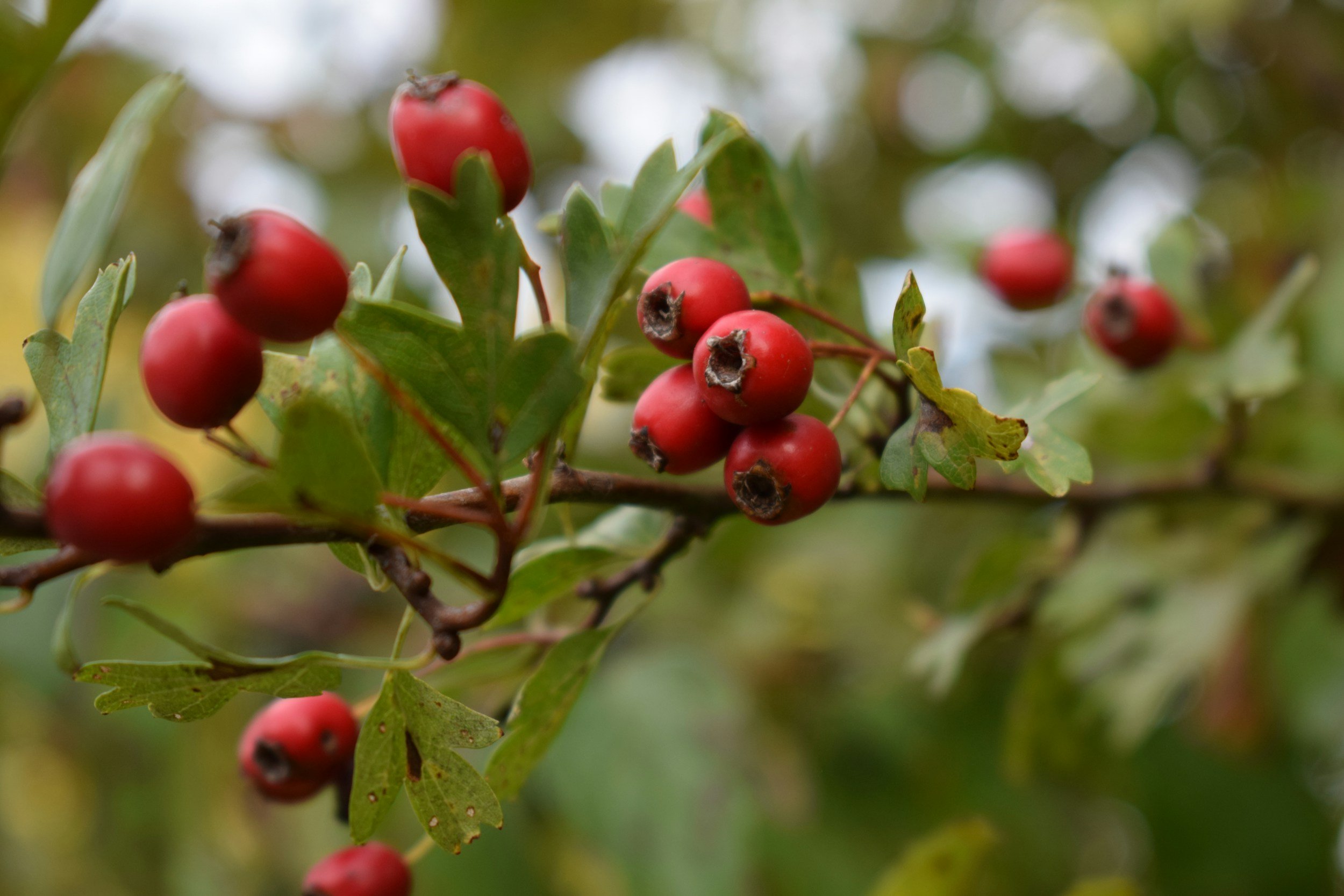
Hawthorn is a long-lived deciduous tree or large shrub known for its spring blossoms, thorny branches, and bright red berries in autumn. Deeply woven into European, Asian, and Indigenous traditions, hawthorn is valued as both a boundary plant and a heart-centered ally. Hawthorn berries are most commonly associated with Medicinal, Metaphysical/ Spiritual, Herbal Tea, and Artistic/Crafting uses.
Read to the end for all details.
Traditional & Common Uses
Hawthorn has served many roles over centuries—protector of boundaries, seasonal marker, and companion to the heart—both symbolically and practically. Common uses of hawthorn berry are described below.
-

Medicinal
Hawthorn holds a significant place in traditional Western herbalism, particularly in long-term, supportive practices. Historically, the berries (along with leaves and flowers) were prepared as teas, syrups, vinegars, or tinctures.
Traditionally associated with heart-centered support, emotional steadiness, and circulatory balance, hawthorn was not viewed as an acute or fast-acting remedy, but rather as a slow, steady companion plant. It has often been used in seasonal or ongoing preparations intended to nourish and support over time rather than produce immediate effects.
-
Metaphysical/Spiritual
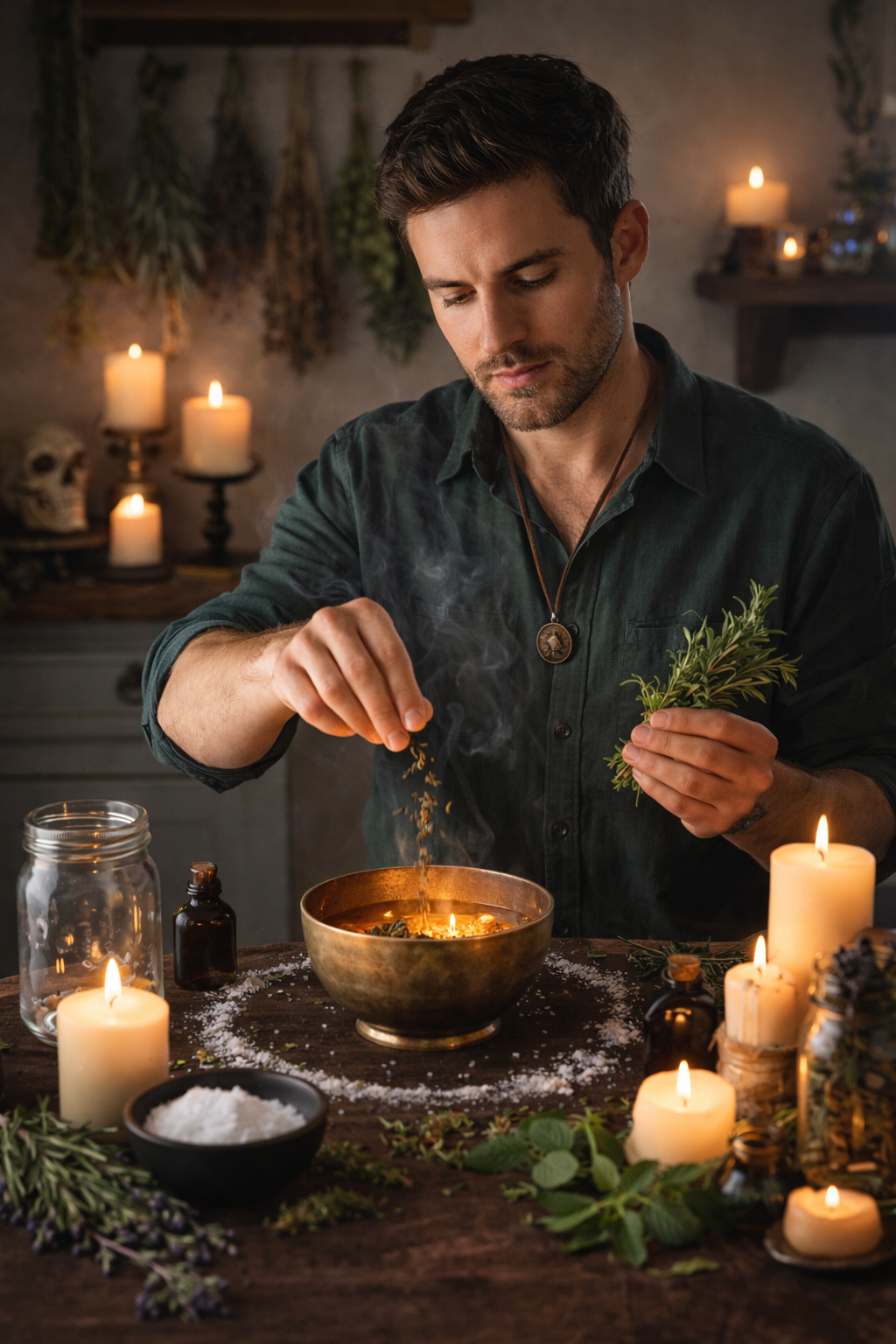
Hawthorn is one of the most symbolically rich trees in European folklore. It has been associated with protection, liminality, the heart, and the threshold between worlds. Often planted as hedgerows or boundary markers, hawthorn was believed to guard edges—between fields, homes, and realms.
Metaphysically, hawthorn has been used in practices related to heart healing, protection, ancestral connection, and honoring transitions. Berries may be included in charms or seasonal rituals focused on emotional resilience, courage, and balance. The tree itself is often treated with reverence rather than harvested heavily.
-

Artistic/Crafting
Hawthorn berries and branches have been used decoratively in autumn wreaths, seasonal displays, and symbolic arrangements. The contrast of red fruit against thorny wood lends itself to themes of beauty and protection. Berries may be dried for craft use, while branches are typically gathered sparingly.
-
Herbal Teas
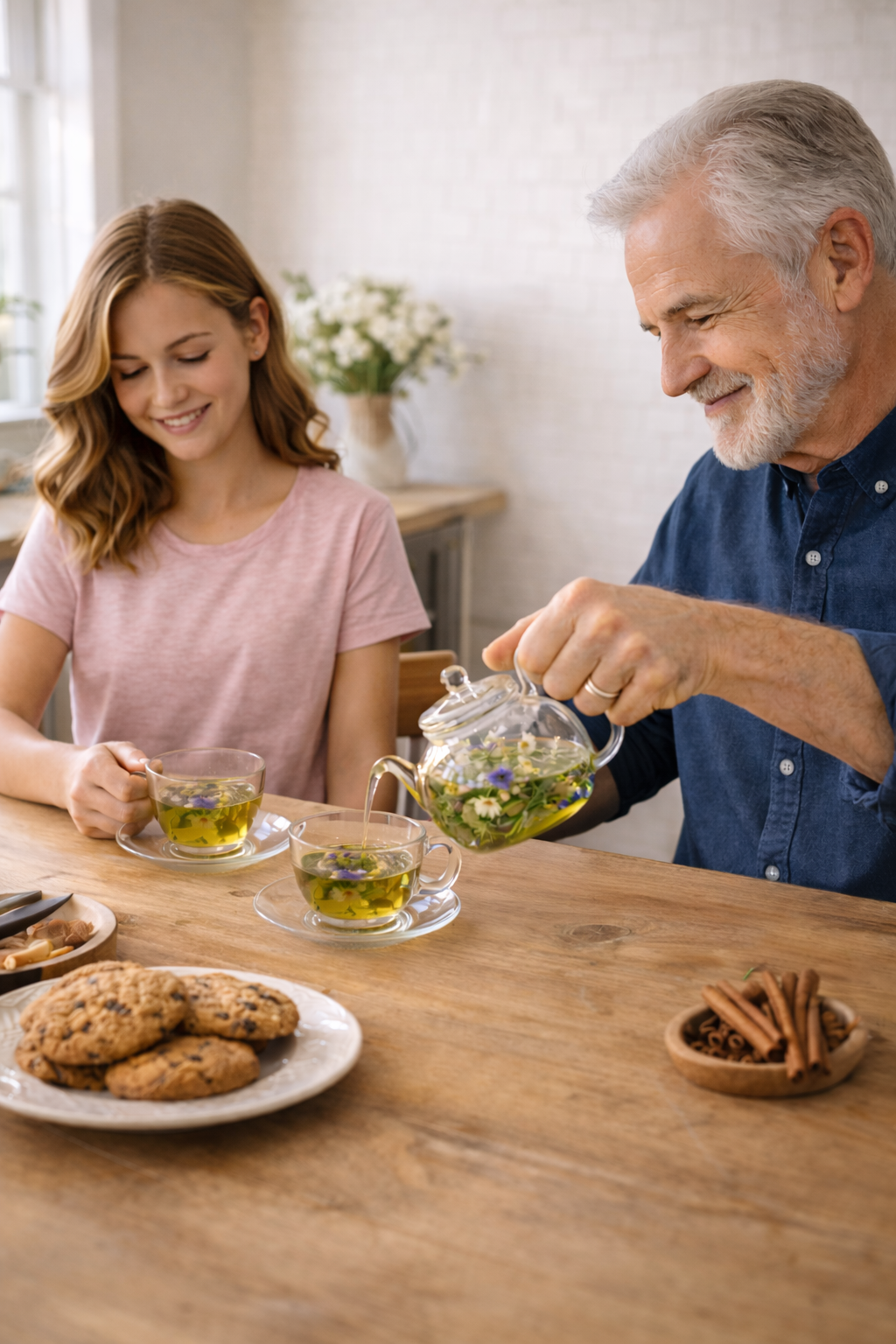
Hawthorn berry tea is traditionally prepared as a long infusion or gentle decoction to draw out its character. The resulting tea is mildly tart, earthy, and grounding.
Historically, hawthorn tea has been consumed regularly over time rather than occasionally, reflecting its traditional role as a steady, supportive plant. It is sometimes blended with herbs such as rose, linden, lemon balm, or hibiscus, depending on tradition and intention.
Our Current Relationship With This Plant
Hawthorn is a plant that asks for patience and respect. We experience it more as a relationship—one that has been unfolding slowly over years. On the farm, hawthorn reminds us that some of the most meaningful plant partnerships are built through observation and long-term presence.
Learn more about how we grow and harvest our herbs.
Typical Availability
Fall: Fresh berries (limited)
Year-round: Dried berries
Future Availability: Fresh & dried leaves & flowers
Visit the Shop Hawthorne Berry page for current availability.
A Gentle Reminder
Hawthorn has a long history of traditional use, particularly in heart-focused herbalism. Because of this association, it is commonly approached with care and respect. Individuals taking heart-related medications or managing cardiovascular conditions are advised to consult a qualified professional before working with hawthorn regularly.
As with all tree-based medicines, hawthorn works gradually, and individual responses can vary.
Information here reflects traditional use, observation, and personal experience, shared for educational purposes. How a plant is used —or whether it’s appropriate for you— can vary. Please be mindful of allergies. Research individual herbs thoroughly and consult a qualified professional when needed.
INDEX:
protection, liminality, the heart, threshold between worlds, hedgerow, boundary, boundaries, guard edges, healing, protection, ancestral connection, transitions, charms, seasonal rituals, emotional resilience, courage, balance, circulatory