
Herbal Profile
Wild Teasel
Dipsacus fullonum (syn. Dipsacus sylvestris)
Family: Caprifoliaceae (Honeysuckle family)
Also known as: Common teasel, Fuller’s teasel (historical)
At a Glance
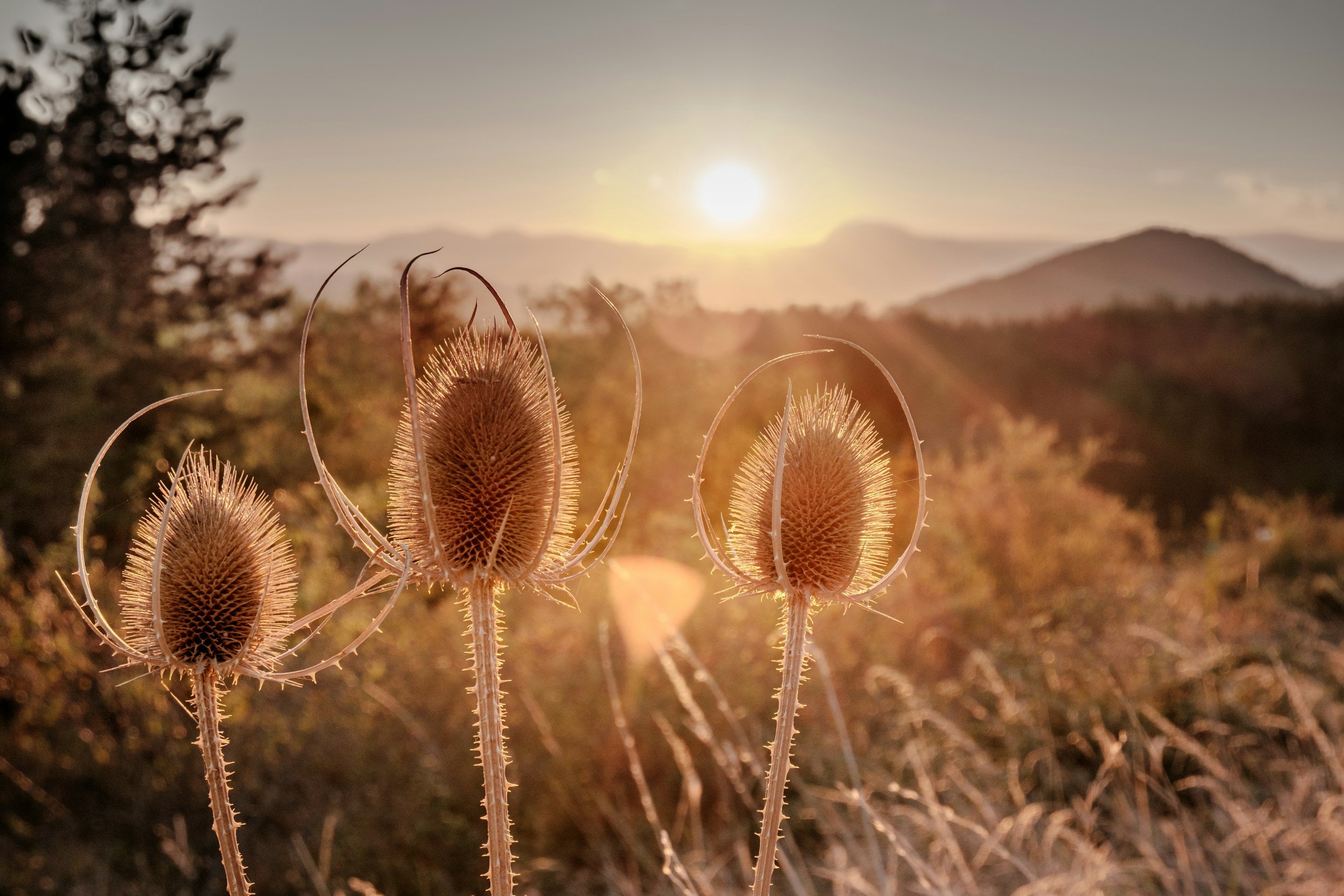
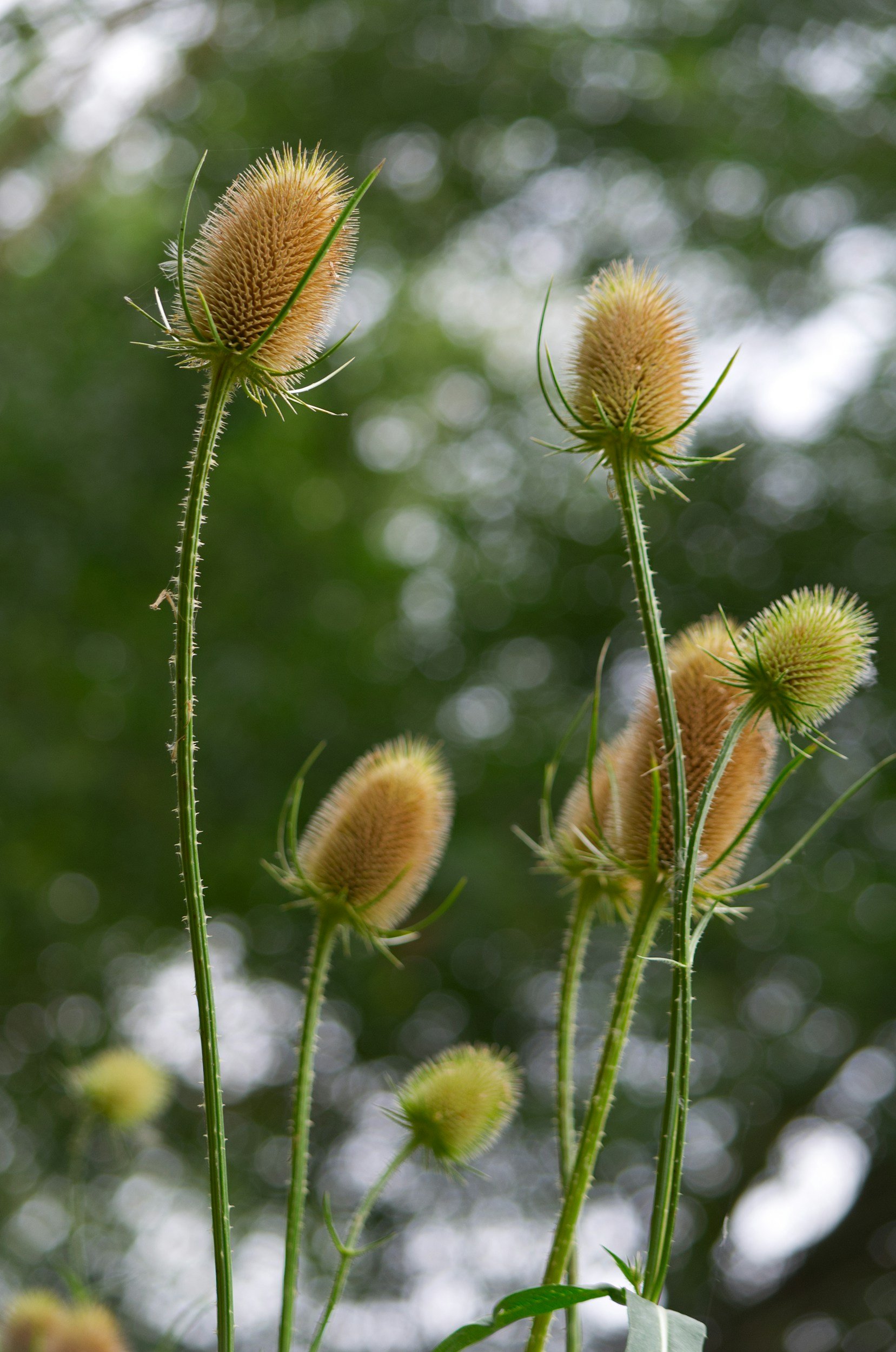
Wild teasel is a striking biennial plant known for its tall, spiny stems and distinctive cone-shaped flower heads. Historically valued for both practical and medicinal purposes, it has long occupied the edges—of fields, of traditions, and of human attention. Wild teasel is most commonly associated with Medicinal, Metaphysical/Spiritual, and Artistic/Crafting uses.
Read to the end for all details.
Traditional & Common Uses
Wild teasel has been approached historically as a purposeful, sometimes challenging plant—one that was not used casually, but with intention and discernment. It’s common uses are described below.
-

Medicinal
In traditional European herbalism, teasel was historically used in a variety of preparations, often involving the root. Its use appears in older texts as part of longer-term or focused practices rather than everyday household remedies. Historically, teasel root was prepared as decoctions, tinctures, or extracts and approached with respect for its strength.
(We do not currently harvest wild teasel root but we might do so in the future.)
-
Metaphysical/Spiritual
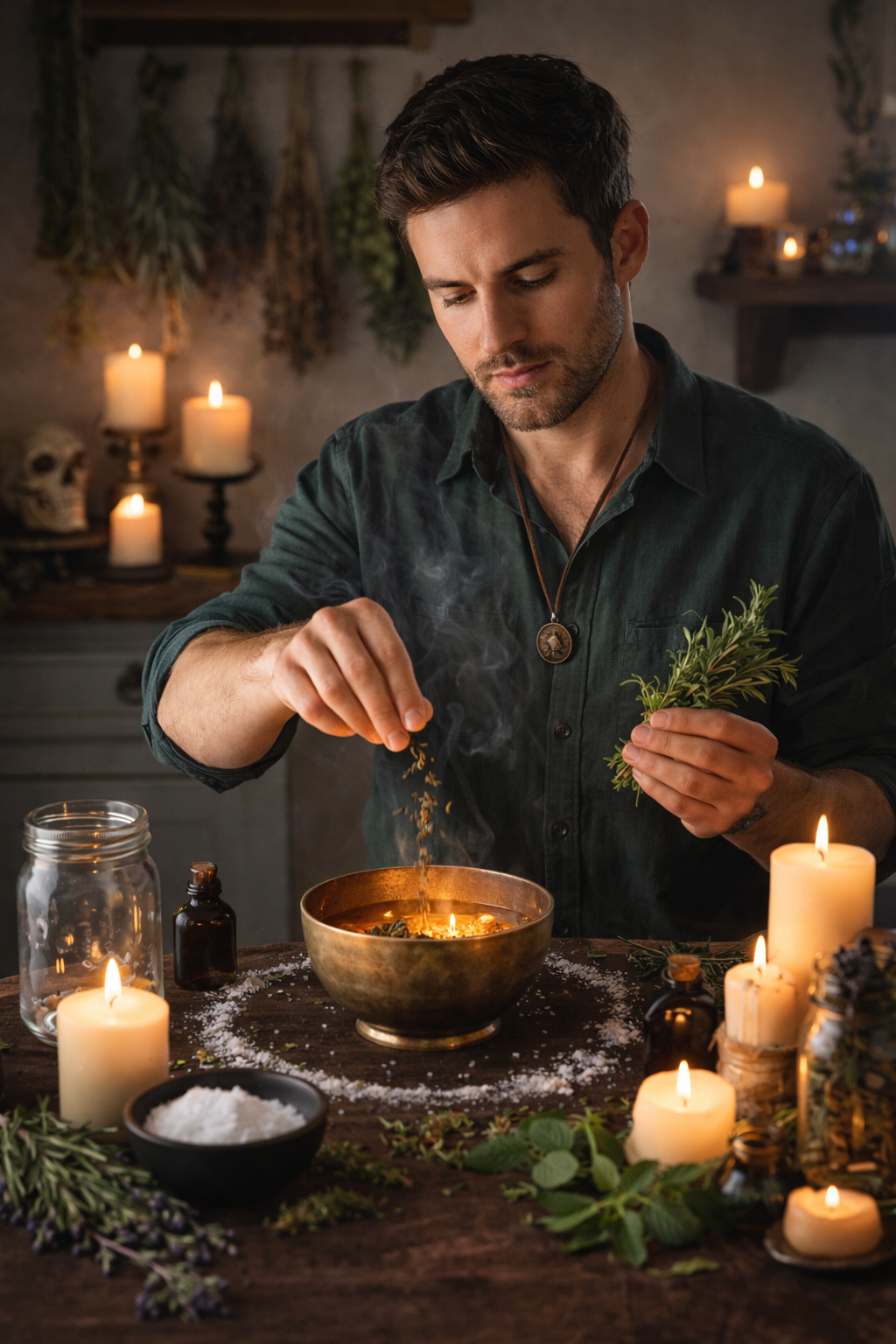
Teasel has been symbolically associated with boundaries, protection, and perseverance. Its formidable structure and tendency to thrive in marginal spaces have linked it, in folklore and traditional practices, to themes of resilience, defense, and standing one’s ground.
Metaphysical properties center on protection and cleansing, with lore suggesting its spiky heads ward off evil spirits. Its dew-filled leaves (called "holy water") are used in rituals for cleansing and beauty.
-

Artistic/Crafting
The dried seed heads of wild teasel have a long history of practical use in textile work, where they were traditionally used to raise the nap on woolen cloth.
Today, they are often used in dried arrangements, wreaths, and sculptural craft work for their dramatic form and texture. Many floral artists paint or dye the dried heads for use in arrangements. The seed heads are also used in electroforming to make striking designs.
Our Current Relationship With This Plant
Wild teasel is a plant we primarily forage rather than cultivate intensively. We currently harvest it mainly for artistic and spiritual purposes. Future plans include harvesting the roots for medicinal purposes.
Learn more about how we grow and harvest our herbs.
Typical Availability
Year Round: Dried seed heads and stalks
Form: Whole dried heads & Stalks
Roots: Not currently harvested
Visit the Shop Wild Teasel page for current availability.
A Gentle Reminder
“Teasel” refers to several species within the Dipsacus genus. This profile refers specifically to wild or common teasel, which differs from cultivated or ornamental teasels in both history and traditional context.
Information here reflects traditional use, observation, and personal experience, shared for educational purposes. How a plant is used —or whether it’s appropriate for you— can vary. Please be mindful of allergies, and research individual herbs thoroughly and consult a qualified professional when needed.
INDEX:
root, boundaries, protection, perseverance, marginal spaces, resilience, defense, standing ground, cleansing, spiky heads, ward evil spirits, dew filled leaves, holy water, beauty, dried seed heads, textile work, raise nap woolen cloth, dried arrangements, wreaths, sculptural craft work, dramatic form, texture, floral paint, dye, electroforming