Herb Education:
Herbal Actions
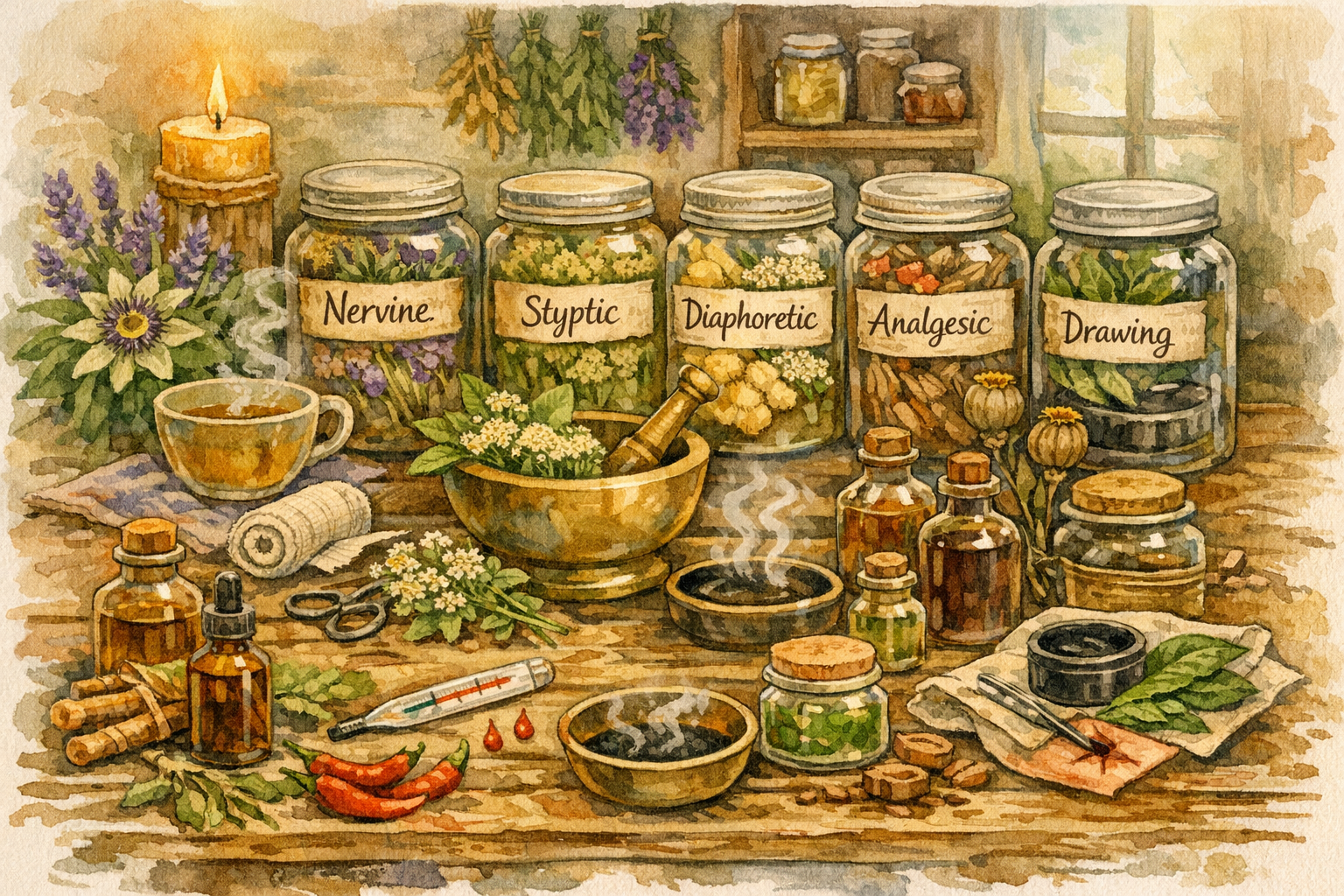
HERAL ACTIONS
In traditional herbalism, plants are often described by their “actions” — the ways they interact with the body and support its natural processes. For example:
Adaptogen (use thoughtfully) – supports resilience to stress
Alterative (traditional term) – supports gradual systemic balance (often used for “spring cleansing” herbs)
Analgesic – eases discomfort or pain
Anti-inflammatory – calms irritation and swelling Antimicrobial – helps resist unwanted microbes Astringent - tightening, toning
Carminative – reduces gas, eases digestion
Circulatory stimulant – improves blood flow
Cooling - reduces heat and calms irritation (physical warmth, inflammation, redness, or general sense of overstimulation)
Demulcent - soothing, moistening
Diaphoretic – encourages sweating
Digestive Bitter (Bitter) – stimulates digestive processes
Diuretic – supports fluid movement and urination
Drawing - helps pull out or bring to the surface (splinters, stings, minor infections, congestion)
Drying - helps reduce excess moisture or dampness in the body; often used when tissues feel overly wet, boggy, or congested
Emollient – softens and soothes skin (slightly different from demulcent)
Expectorant – helps clear mucus from lungs Moistening - adds hydration and softness to dry or depleted tissues
Nervine – supports the nervous system (can be calming or toning)
Relaxant – eases tension in body or mind
Rubefacient – brings warmth to the surface (increases local circulation
Sedative – promotes rest or sleep
Stimulating - encourages activity and responsiveness in the body (circulation, digestion, general alertness)
Styptic – helps stop bleeding Tonic – general strengthening or nourishing over time
Vulnerary - supporting skin repair
Warming - increases circulation, encourages movement, and brings heat into the body