
Herbal Profile
Purple Dead Nettle
Lamium purpureum
Family: Lamiaceae (Mint family)
Also known as: dead nettle, red deadnettle, purple archangel
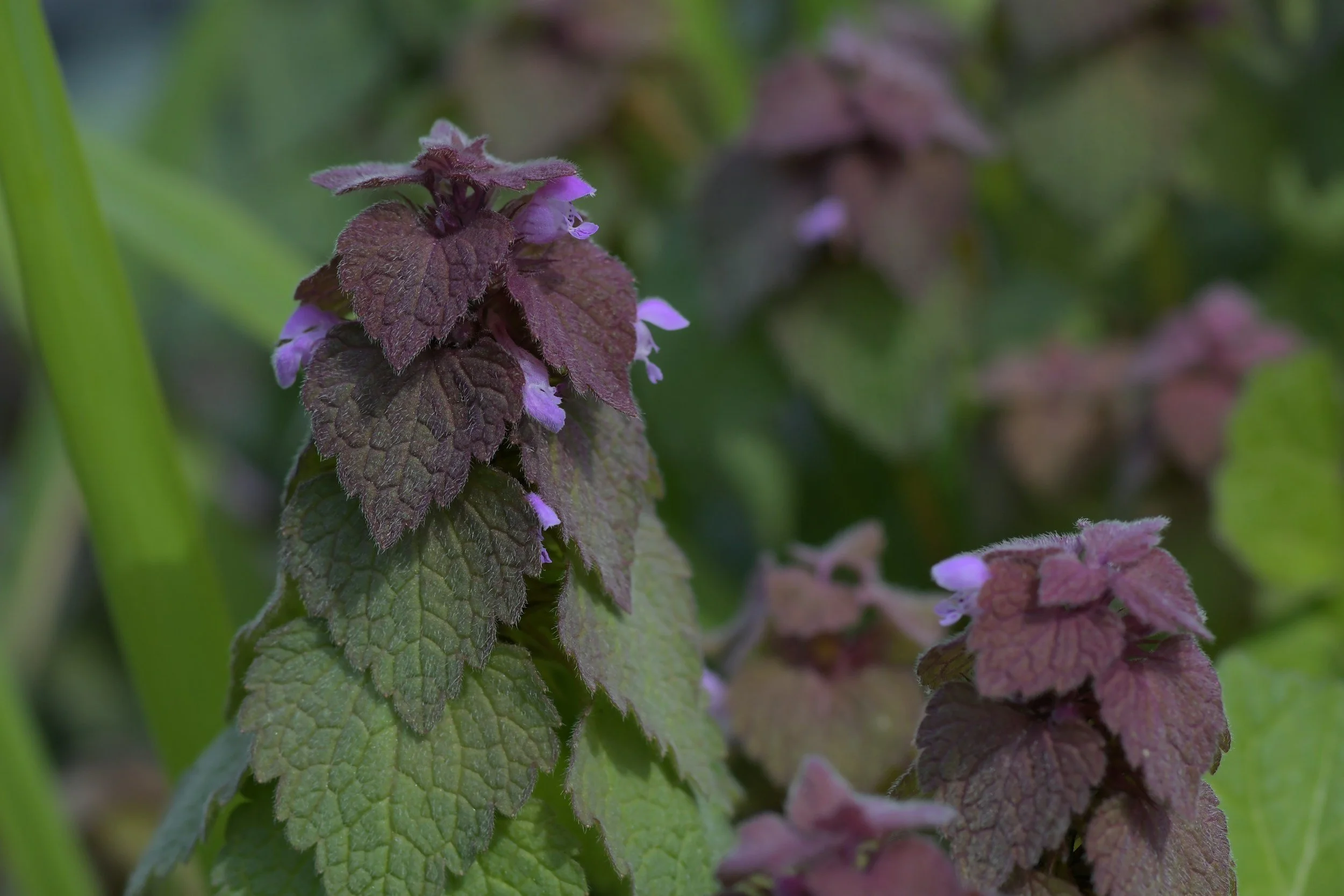
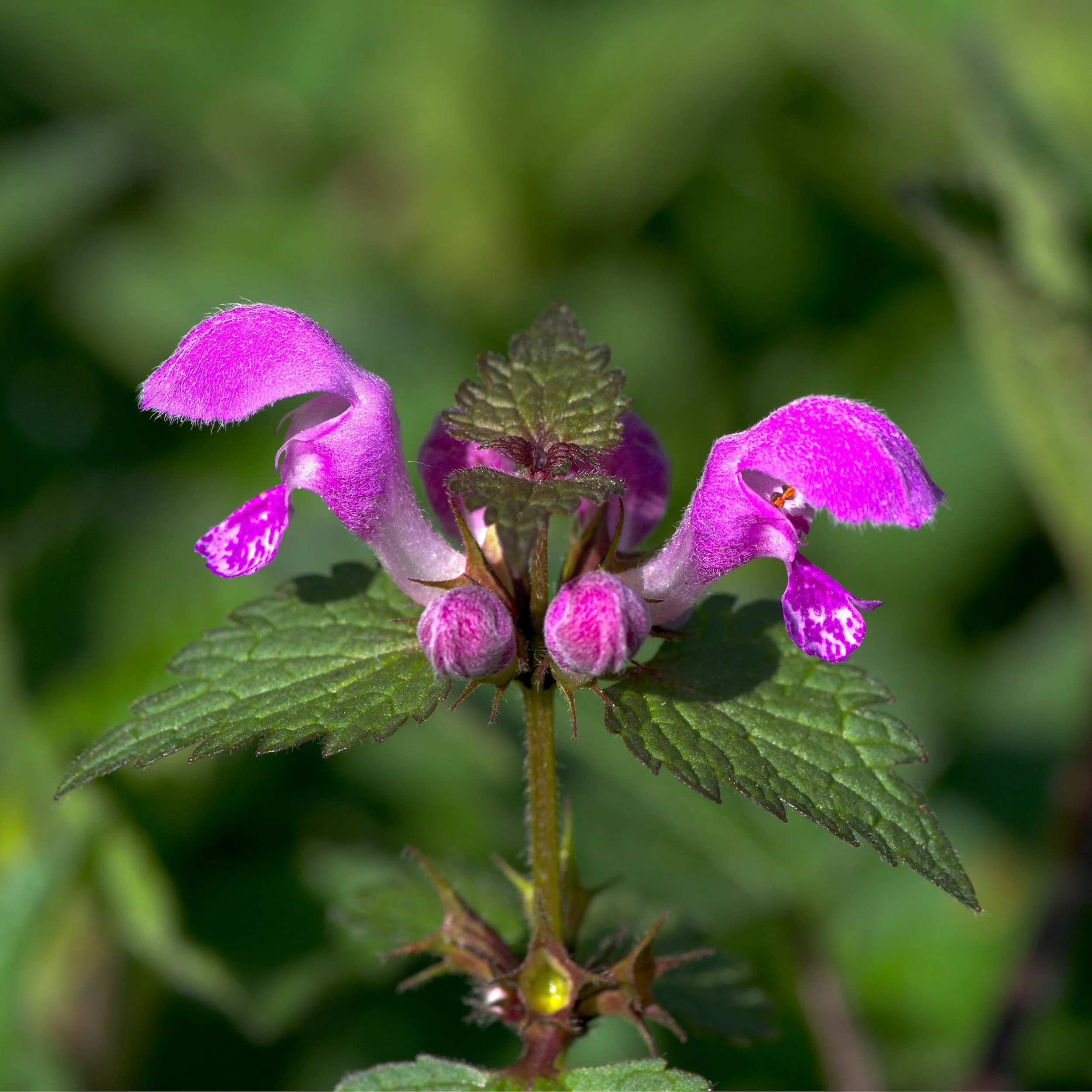
At a Glance
Purple dead nettle is a small, fast-growing annual in the mint family, recognized by its soft, fuzzy leaves and purplish tops that appear in early spring. Despite its name, it is unrelated to stinging nettle and does not sting. Often one of the first green plants to emerge after winter, purple dead nettle has been noted in Culinary, Medicinal, Metaphysical / Spiritual, Cosmetic, and Herbal Tea traditions, and is also valued as an early-season pollinator plant.
Read to the end for all details.
Purple dead nettle has long been noticed by herbalists and foragers as one of the earliest edible greens to appear each year. While often considered a “wild plant” or volunteer herb, it has been used in a variety of simple seasonal preparations, as described below:
Traditional & Common Uses
-

Culinary
Purple dead nettle has occasionally been used as a mild spring green. Traditionally it has been added fresh to salads, pestos, smoothies, or lightly cooked in soups and sautés. The flavor is generally described as gentle and slightly herbal, making it a subtle addition rather than a dominant one.
Because the leaves are soft and tender, they are most often harvested when young and fresh in early spring.
-

Medicinal
Purple dead nettle is a versatile, nutrient-dense spring herb used for its anti-inflammatory, antimicrobial, and astringent properties. In traditional folk herbalism, common medicinal uses include treating seasonal allergies, acting as a natural diuretic to treat UTIs, and applying fresh leaves or salves topically to soothe wounds and skin irritations.
Methods of Use: Tea/Infusion: Fresh or dried leaves steeped in hot water; Poultice: Fresh leaves crushed and applied directly to wounds; Salve: Infused oil mixed with beeswax to make a healing skin balm; Tincture: Alcohol extraction for a concentrated extract.
-

Metaphysical/Spiritual
Purple dead nettle is often associated with resilience, quiet abundance, and the unnoticed gifts of early spring. Because it appears quickly in disturbed soil and overlooked places, it has been symbolically linked to humility, adaptability, and unexpected nourishment.
In folk symbolism, it may represent: Finding value in overlooked places; Quiet persistence; The return of life after dormancy;
Some practitioners include early spring herbs like purple dead nettle in seasonal rituals marking renewal or transition.
-

Artistic / Crafting
Add text
-

Herbal Teas
Purple dead nettle tea is traditionally prepared as a mild infusion of the dried or fresh aerial parts. The resulting tea is light and earthy with a subtle green flavor.
As a member of the mint family, it is sometimes blended with other gentle herbs such as lemon balm, nettle, mint, or chamomile for a more balanced and flavorful cup. Historically it has been used more as a supportive herb for its medicinal properties than as a dominant flavor in herbal teas.
Our Current Relationship With This Plant
Purple dead nettle often appears on its own timetable, arriving early in the season before many other herbs have awakened. It is often our first foraged plant of the season.
Learn more about how we grow and harvest our herbs.
Typical Availability
Spring: Fresh
Year-roud: Dried
Visit the Shop Purple Dead Nettle page for current availability.
A Gentle Reminder
Purple dead nettle is generally considered a mild wild herb; however, large quantities of the tea can have a mild laxative effect.
Information here reflects traditional use, observation, and personal experience, shared for educational purposes. How a plant is used —or whether it’s appropriate for you— can vary. Please be mindful of allergies. Research individual herbs thoroughly and consult a qualified professional when needed.
INDEX:
nutrient dense, anti-inflammatory, antimicrobial, astringent, seasonal allergies, diuretic, UTI, salve, topical, wounds, skin irritation, renewal, transition, resilience, quiet abundance, humility, adaptability, value in overlooked places, persistence, the return of life after dormancy